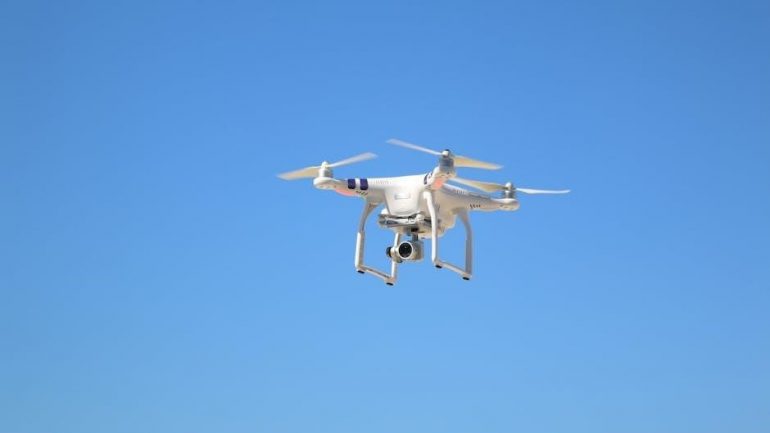
The DJI Phantom 3 Standard offers a gateway into aerial photography, supported by a comprehensive manual for seamless operation and safety.
This manual guides users through setup, flight, and advanced features, ensuring a rewarding experience with this innovative drone.
Downloadable resources and forums provide additional support, fostering a community for Phantom 3 Standard enthusiasts.
What’s in the Box?
Upon unboxing your DJI Phantom 3 Standard, you’ll discover a meticulously packaged set of components designed for immediate flight readiness. The core inclusion is, of course, the aircraft itself, alongside a dedicated Intelligent Flight Battery, providing substantial flight time.
A remote controller is also present, enabling precise control, and a set of propellers are included for lift and maneuverability. The manual emphasizes the importance of checking all components against the included list. You’ll also find a battery charger, ensuring your drone is always powered up, and a user manual, vital for safe and effective operation.
Additional items include a gimbal clamp, and various cables for connectivity.
Key Features and Specifications
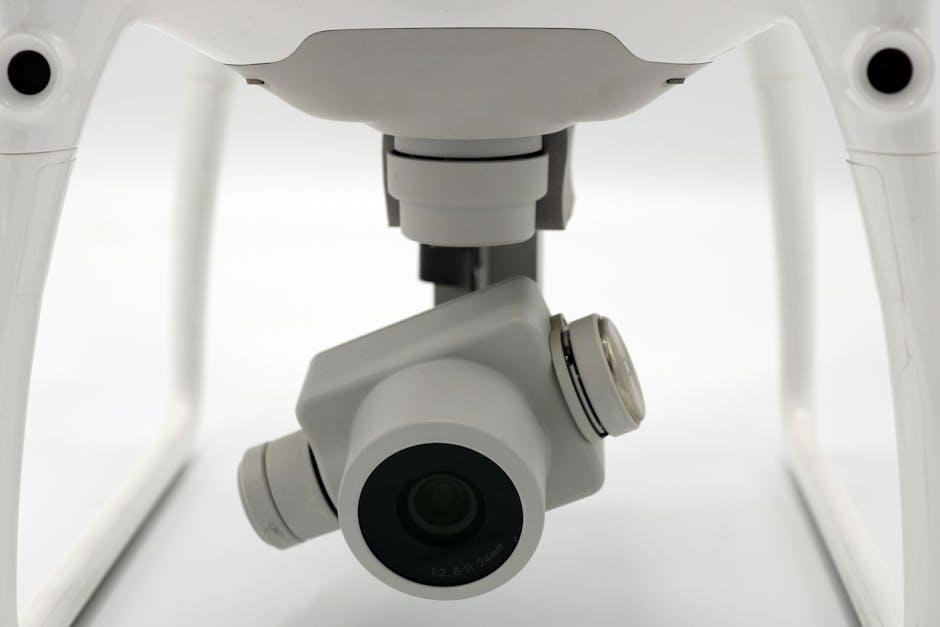
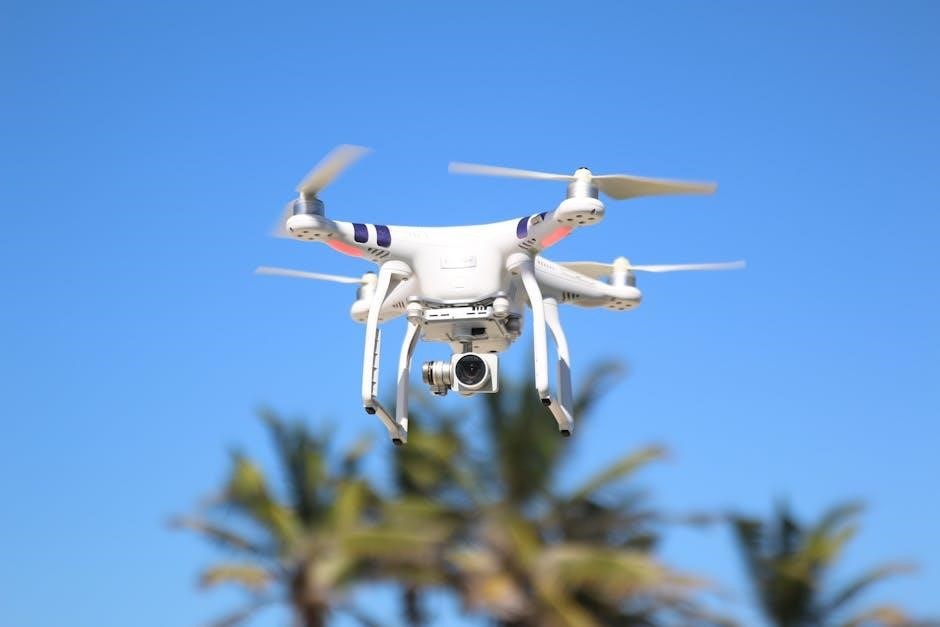
The DJI Phantom 3 Standard boasts a 2.7K HD camera, capturing stunning aerial footage as detailed in the manual. Its 3-axis gimbal stabilization ensures smooth, cinematic shots, even in windy conditions. Weighing 1216g with the battery, it offers a balance of portability and stability.
Key features include GPS positioning, allowing for precise hovering and Return-to-Home functionality. The manual highlights the importance of understanding flight modes – P, A, and S – for varied control experiences. It has a maximum control range of up to 1km.
Preparing for Your First Flight
The manual emphasizes crucial pre-flight steps: charging the battery, installing propellers correctly, and downloading the DJI GO app for control.
Prioritize safety and familiarize yourself with the drone before your initial flight experience.
Charging the Intelligent Flight Battery
The DJI Phantom 3 Standard manual details proper battery charging procedures for optimal performance and longevity. Utilize the DJI-supplied charger and power source, avoiding third-party alternatives.
Charging time varies, but the manual indicates full charge completion with LED indicators. Never leave a charging battery unattended, and always disconnect it once fully charged.
Store batteries at room temperature, and avoid extreme heat or cold. Proper battery care, as outlined in the manual, ensures safe and reliable flight operations.
Installing the Propellers
The DJI Phantom 3 Standard manual provides clear instructions for correct propeller installation, crucial for stable flight. Each propeller is marked, and the manual specifies matching propeller type to corresponding motor arms.
Ensure propellers are securely tightened, but avoid over-tightening, which can damage the motors. Incorrect installation can lead to flight instability or even crashes.
Regularly inspect propellers for damage, and replace them as needed, following the guidelines in the manual. Proper propeller maintenance is vital for safe operation.
Downloading and Installing the DJI GO App
The DJI Phantom 3 Standard manual emphasizes the necessity of the DJI GO app for flight control and settings adjustments. Download the app via the App Store or Google Play, or by scanning the provided QR code.
Ensure your mobile device meets the app’s system requirements for optimal performance. Follow the on-screen instructions during installation, granting necessary permissions.
The manual details initial app setup, including account registration and firmware updates, essential for a smooth flying experience.
Understanding the DJI GO App Interface
The DJI Phantom 3 Standard manual details the app’s intuitive interface, covering the home screen, camera view, and flight mode selection for optimal control.
Mastering these elements unlocks the drone’s full potential.
Home Screen Overview
The DJI Phantom 3 Standard manual explains the home screen displays crucial flight information, including altitude, distance, battery level, and signal strength.
It highlights the map view, showcasing the drone’s location and flight path, alongside return-to-home point indicators.
The manual details accessing settings, intelligent flight modes, and camera controls directly from this central hub.
Understanding these elements provides a quick grasp of the drone’s status and enables efficient navigation.
The app interface is designed for intuitive operation, as described in the comprehensive guide.
Camera View Settings
The DJI Phantom 3 Standard manual details extensive camera view settings within the DJI GO app, allowing for customized image capture.
Users can adjust exposure, ISO, shutter speed, and white balance for optimal image quality, as explained in the guide.
The manual clarifies options for gridlines, histograms, and focus peaking to aid composition and precise focusing.
Advanced settings include control over picture profiles and video resolution, catering to diverse shooting needs.
These settings, thoroughly documented, empower users to unlock the camera’s full potential.
Flight Mode Selection
The DJI Phantom 3 Standard manual comprehensively explains the three flight modes: P-Mode (Positioning), A-Mode (Attitude), and S-Mode (Sport), each offering distinct control levels.
P-Mode utilizes GPS for stable hovering and simplified flight, ideal for beginners, as detailed in the documentation.
A-Mode disables GPS, requiring manual control and offering greater agility, suited for experienced pilots.
S-Mode unlocks faster speeds and increased responsiveness, enhancing dynamic flight capabilities.
The manual guides users on safely switching between modes and understanding their implications.
Pre-Flight Checklist & Safety Procedures
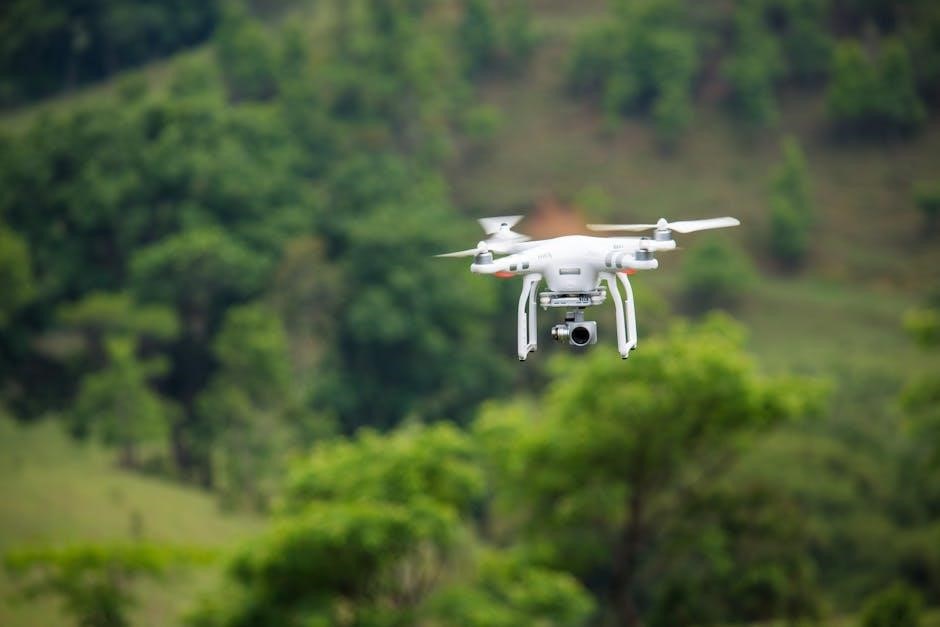
The DJI Phantom 3 Standard manual emphasizes crucial pre-flight steps like compass and IMU calibration for safe operation.
Adhering to these procedures, detailed in the guide, ensures optimal performance and minimizes potential risks during flight.
Compass Calibration
The DJI Phantom 3 Standard manual stresses the importance of compass calibration before each flight, and whenever prompted by the DJI GO app.
This process mitigates magnetic interference, ensuring accurate positioning and stable flight. The manual details a simple procedure: place the drone on a level surface, away from metal objects.
Follow the on-screen instructions within the DJI GO app, rotating the drone horizontally and vertically as guided. Successful calibration is vital for Return-to-Home functionality and overall flight safety, as outlined in the documentation.
Always re-calibrate if flying in a new location.
IMU Calibration
The DJI Phantom 3 Standard manual highlights IMU (Inertial Measurement Unit) calibration as crucial for maintaining flight stability and accuracy. This process compensates for sensor drift caused by temperature changes or impacts.
The manual instructs users to place the drone on a perfectly level surface and initiate the calibration through the DJI GO app.
Keep the drone completely still during the process, which typically takes a few seconds. Successful IMU calibration, as detailed in the documentation, ensures optimal performance and reliable flight characteristics.
Regular calibration is recommended.
Remote Controller Setup
The DJI Phantom 3 Standard manual details a straightforward remote controller setup process. Begin by fully charging the remote using the provided battery and cable. Power on both the remote and the drone, ensuring they are paired correctly via the DJI GO app.
The manual emphasizes securely attaching the mobile device holder and connecting your smartphone or tablet.
Familiarize yourself with the control stick functions and button layout as described in the documentation for safe and precise operation. Proper setup is vital for a successful flight.
Mastering Flight Controls
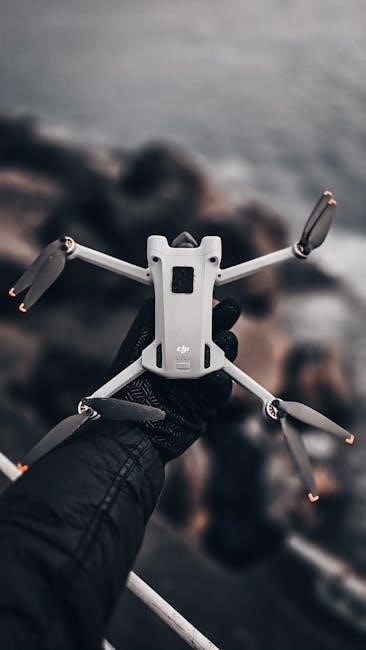
The DJI Phantom 3 Standard manual details basic flight commands and the flight mode switch (P, A, S).
Practice these controls for smooth operation and utilize the Return-to-Home function for safety.
Basic Flight Commands
The DJI Phantom 3 Standard manual meticulously outlines fundamental flight controls for intuitive operation. Left stick manages altitude and rotation, while the right stick governs forward/backward and lateral movement.
Gentle stick inputs yield smoother flight; abrupt movements can cause instability. Understanding these core commands, as detailed in the manual, is crucial for safe and controlled aerial maneuvers.
Practice in an open area, referencing the manual’s diagrams, to build confidence and proficiency before attempting complex flights.
Using the Flight Mode Switch (P-Mode, A-Mode, S-Mode)
The DJI Phantom 3 Standard manual explains the Flight Mode Switch’s functionality, offering varied control experiences. P-Mode (Positioning) provides stable hovering and simplified control, ideal for beginners.
A-Mode (Attitude) disables GPS, demanding manual stabilization – practice is essential. S-Mode (Sport) unlocks faster speeds and agility, but reduces safety features.
The manual stresses understanding each mode’s implications before switching, ensuring safe and controlled flight. Enable modes via the DJI GO app’s Advanced Settings.
Return-to-Home (RTH) Function
The DJI Phantom 3 Standard manual details the crucial Return-to-Home (RTH) function, a vital safety feature. Activated manually or automatically upon signal loss, RTH returns the drone to its takeoff point.
The manual emphasizes setting a proper RTH altitude, higher than surrounding obstacles, for safe navigation. Understanding RTH’s limitations, like potential interference, is key.
Always verify GPS signal strength before flight, ensuring RTH functionality. Familiarize yourself with RTH settings within the DJI GO app for optimal performance.
Camera Operation & Settings
The DJI Phantom 3 Standard manual explains adjusting camera angles and optimizing photo/video settings for stunning aerial captures.
Explore intelligent flight modes within the manual to unlock creative possibilities and enhance your photography skills.
Adjusting Camera Angle
The DJI Phantom 3 Standard manual details how to remotely tilt the integrated camera, offering flexible framing for diverse shots. Users can precisely control the camera’s downward angle via the DJI GO app, achieving optimal perspectives.
The manual emphasizes smooth adjustments for stable footage, avoiding abrupt movements that could impact video quality. It also explains the limitations of the gimbal’s tilt range, ensuring safe operation.
Understanding these controls, as outlined in the manual, is crucial for capturing professional-looking aerial photos and videos with the Phantom 3 Standard.
Photo and Video Settings
The DJI Phantom 3 Standard manual comprehensively covers adjustable camera settings within the DJI GO app. Users can select resolution for both photos and videos, ranging up to 2.7K, influencing file size and detail.
The manual details options for photo formats (JPEG, DNG) and video codecs, impacting post-processing flexibility. It also explains ISO, shutter speed, and white balance controls, vital for achieving desired image quality.
Mastering these settings, as described in the manual, unlocks the Phantom 3 Standard’s full photographic potential.
Using Intelligent Flight Modes for Capture
The DJI Phantom 3 Standard manual details how to leverage intelligent flight modes for automated, cinematic shots. These modes, accessible via the DJI GO app, simplify complex maneuvers;
The manual explains Point of Interest (POI) mode, circling a selected subject, and Waypoint Navigation, pre-programming flight paths. It also covers FPV mode for immersive control.
Understanding these features, as outlined in the manual, allows users to capture professional-quality aerial footage with ease, enhancing creative possibilities.
Advanced Features & Settings
The DJI Phantom 3 Standard manual unlocks features like FPV mode, waypoint navigation, and Point of Interest, enhancing flight control and capture options.
Explore advanced settings within the DJI GO app for customized performance.
First-Person View (FPV) Mode
The DJI Phantom 3 Standard manual details how to immerse yourself in flight with First-Person View (FPV) mode, offering a pilot’s-eye perspective.
This mode transmits live video from the drone’s camera to compatible goggles or a mobile device, creating a truly engaging experience.
The manual emphasizes safety precautions for FPV operation, including maintaining visual contact with the drone initially and understanding the controls.
Enable FPV through the DJI GO app’s advanced settings, ensuring proper configuration for optimal performance and a thrilling, immersive flight.
Waypoint Navigation
The DJI Phantom 3 Standard manual explains how to utilize waypoint navigation for automated flight paths, enhancing aerial filming and inspection capabilities.
This feature allows users to define multiple points of interest on a map within the DJI GO app, creating a pre-programmed flight route.
The manual stresses the importance of pre-flight planning, obstacle avoidance, and verifying the route before initiating automated flight.
Waypoint navigation offers precise and repeatable flight patterns, ideal for capturing consistent footage or conducting systematic surveys.
Point of Interest (POI) Mode
The DJI Phantom 3 Standard manual details the Point of Interest (POI) mode, enabling the drone to orbit a selected subject automatically.
Users define a subject within the DJI GO app, and the drone maintains a consistent distance and angle while circling it.
The manual emphasizes setting a safe radius and altitude for the orbit, considering potential obstacles and airspace restrictions.
POI mode simplifies capturing cinematic footage, providing smooth, circular shots around a specific focal point with ease and precision.
Maintenance & Troubleshooting
The DJI Phantom 3 Standard manual provides guidance on battery care, propeller replacement, and resolving common error messages for optimal drone performance.
Battery Care and Storage
The DJI Phantom 3 Standard manual emphasizes proper Intelligent Flight Battery handling for longevity and safety. Always fully charge the battery before initial use and store it at a temperature between 41°F and 86°F (5°C to 30°C).
Avoid prolonged storage at full charge or complete discharge; aim for a storage capacity of 40%-60%. Regularly check the battery for any signs of damage, such as swelling or leakage. Follow the manual’s instructions for safe charging and discharging procedures to maximize battery life and prevent potential hazards.
Propeller Replacement
The DJI Phantom 3 Standard manual details a straightforward propeller replacement process, crucial for maintaining flight stability. Always power off the aircraft before replacing propellers, and ensure correct propeller pairing – clockwise or counter-clockwise – as indicated by markings.
Use the provided tool to securely tighten the propellers. Regularly inspect propellers for cracks or damage, replacing them immediately if found. Following the manual’s guidance ensures optimal performance and prevents potential flight issues caused by damaged or improperly installed propellers.
Common Error Messages and Solutions
The DJI Phantom 3 Standard manual provides a detailed troubleshooting section addressing common error messages. These range from GPS signal loss to IMU errors, each with specific solutions outlined. Often, recalibrating the compass or IMU resolves these issues, as detailed in the manual.
Referencing the manual before contacting support can quickly diagnose and fix problems. Ensure firmware is updated, and review safety guidelines to prevent recurring errors, maximizing flight time and safety.
Firmware Updates
The DJI Phantom 3 Standard manual emphasizes regular firmware updates for the aircraft, remote, and app, enhancing performance and stability.
Follow the manual’s instructions for a safe and successful update process, ensuring optimal drone functionality.
Updating the Aircraft Firmware
The DJI Phantom 3 Standard manual details a crucial process: updating the aircraft’s firmware. This ensures optimal performance, stability, and access to new features.
Connect your drone to a computer with the DJI GO app installed, following the on-screen prompts carefully.
Maintain a stable connection throughout the update, and never power off the drone during this process.
The manual stresses the importance of using the latest firmware version for safe and reliable flight operations. Regularly check for updates via the DJI GO app.
Updating the Remote Controller Firmware
The DJI Phantom 3 Standard manual emphasizes the necessity of keeping the remote controller’s firmware current. This update enhances responsiveness and compatibility with the aircraft and DJI GO app.
Connect the remote controller to your computer using a USB cable, and follow the instructions within the DJI GO app.
Ensure a stable connection during the update, avoiding any interruptions.
The manual highlights that updated firmware resolves potential issues and unlocks new functionalities for a superior flying experience.
Updating the DJI GO App
The DJI Phantom 3 Standard manual stresses the importance of regularly updating the DJI GO app for optimal performance and access to the latest features.
Updates are typically available through the App Store (iOS) or Google Play Store (Android).
The manual advises checking for updates before each flight to ensure compatibility with the aircraft and remote controller firmware.
These updates often include bug fixes, improved stability, and new functionalities, enhancing the overall user experience.
Safety Guidelines & Regulations
The DJI Phantom 3 Standard manual emphasizes flying within legal limits and avoiding obstacles for safe operation.
Emergency procedures are detailed, prioritizing responsible drone piloting and adherence to all applicable regulations.
Flying Within Legal Limits
The DJI Phantom 3 Standard manual stresses the importance of understanding and adhering to local aviation regulations before each flight.
Operators must be aware of airspace restrictions, altitude limitations, and no-fly zones, often detailed within the DJI GO app and official aviation authorities.
Respecting these guidelines ensures responsible drone operation and avoids potential legal repercussions.
Always check for temporary flight restrictions (TFRs) and comply with all applicable rules to maintain safe and legal aerial activities.
Prioritize safety and legality for a positive flying experience.
Avoiding Obstacles
The DJI Phantom 3 Standard manual emphasizes maintaining a clear line of sight and proactively scanning for obstacles during flight.
Pilots should identify potential hazards like buildings, trees, power lines, and people before and during operation.
Utilize the DJI GO app’s camera view to aid in obstacle detection, but never solely rely on technology.
Practice flying in open areas initially to build confidence and situational awareness.
Prioritize safe distances and be prepared to maneuver to avoid collisions, ensuring a secure flight.
Emergency Procedures
The DJI Phantom 3 Standard manual details critical emergency protocols for safe operation. In case of signal loss, activate Return-to-Home (RTH) immediately.
Understand RTH altitude settings and ensure sufficient clearance from obstacles.
If the drone malfunctions, attempt a controlled landing in a safe, open area.
Familiarize yourself with the manual’s troubleshooting section for common error resolutions.
Prioritize personal safety and avoid approaching a downed drone until it’s completely powered off.
Resources & Support
The DJI Phantom 3 Standard manual directs users to the official DJI website for forums, documentation, and direct support channels.
Downloadable manuals and helpful guides enhance the user experience.
DJI Official Website & Forums
The DJI official website (dji.com) serves as the primary hub for Phantom 3 Standard resources, including the downloadable user manual in PDF format.
Explore comprehensive documentation, FAQs, and troubleshooting guides to address common issues.
Engage with a vibrant community of Phantom 3 pilots on the DJI forums, sharing experiences, tips, and solutions.
These forums offer a platform for asking questions, receiving assistance from experienced users, and staying updated on firmware releases and product announcements related to your drone.
Directly accessing DJI’s support channels through the website ensures timely assistance.
Downloading Manuals & Documentation
Accessing the Phantom 3 Standard manual is straightforward via the official DJI website. Locate the product page for the Phantom 3 Standard and navigate to the “Downloads” or “Support” section.
Here, you’ll find the comprehensive user manual available for download in PDF format, offering detailed instructions and safety guidelines.
Additional documentation, including quick start guides and firmware release notes, are also readily available.
Ensure you have the latest version for optimal performance and feature utilization.
These resources empower users with the knowledge to operate their drone safely and effectively.
Contacting DJI Support
For assistance beyond the Phantom 3 Standard manual, DJI offers multiple support channels. Visit the official DJI website and navigate to the “Support” section to access their online knowledge base and FAQs.
You can also submit support requests through their online form, detailing your issue for personalized assistance.
DJI’s official forums provide a platform to connect with other users and find solutions.
Direct contact options, such as phone or email, may be available depending on your region.
Prompt and helpful support ensures a positive user experience.